We endorse Miguel Alvelo-Rivera for Illinois House District 40
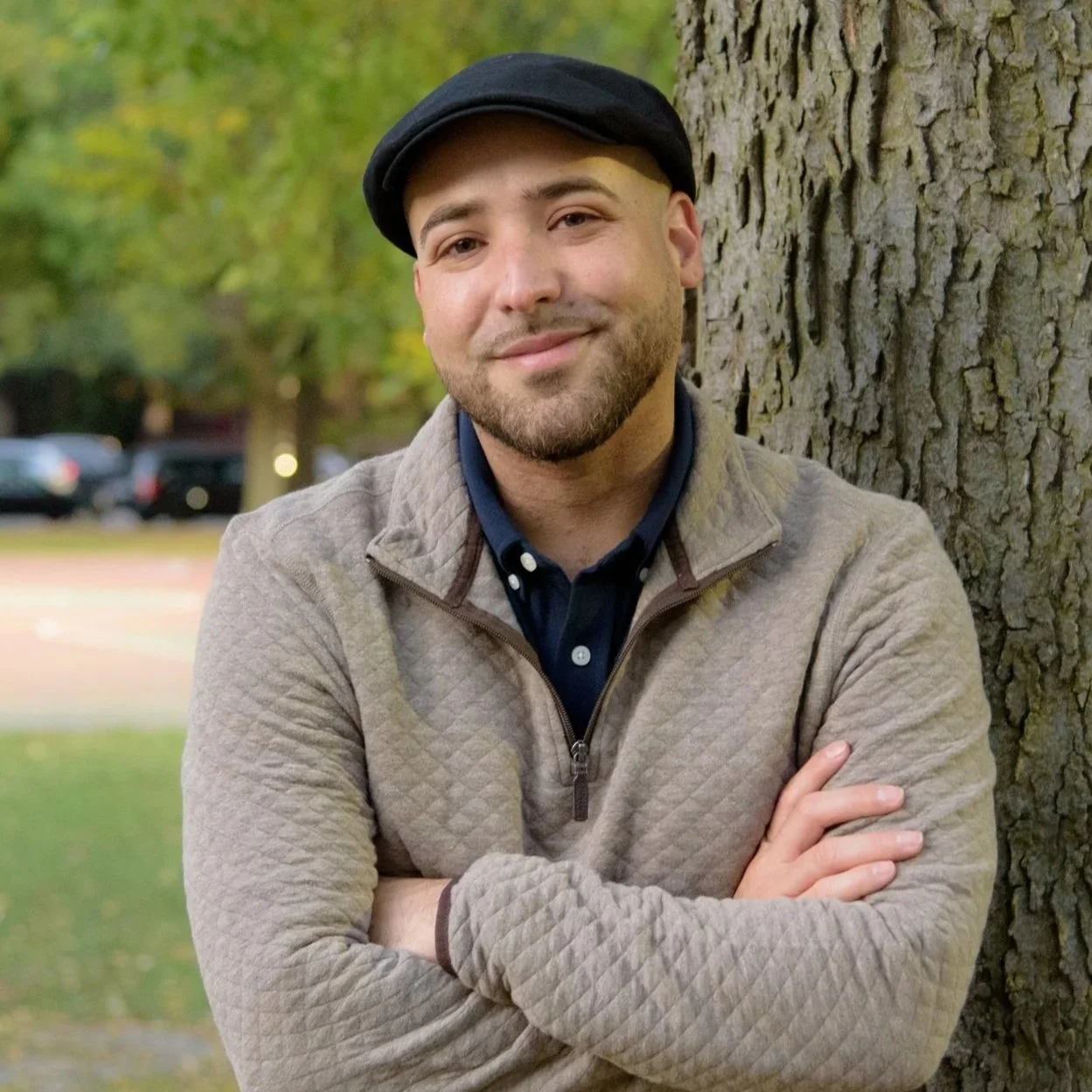
A versed community organizer, Miguel Alvelo-Rivera’s background means he’s plugged into the community he seeks to serve and Chicago’s progressive ecosystem. He knows that public safety means recognizing the most dangerous parts of Chicago’s transportation system “Another challenge is traffic violence; which is the most immediate threat to life in the 40th District, specifically at high-conflict intersections that fail to protect vulnerable road users.”
Miguel’s well-rounded approach to advocacy makes him the right choice for House District 40.
Read Miguel’s responses to our questionnaire
What types of transportation do you use during an average week, and how has this shaped your view of transportation policy?
What types of transportation do you use during an average week, and how has this shaped your view of transportation policy?
I live just a few blocks from the Latino Union office, so I primarily walk. When traveling around the city, I rely mostly on biking, the train, and the bus, and I frequently use Divvy. I also own a car, and drive it when moving to other parts of the city or state that are less reliable in terms of public transportation.
Relying on public transportation has made it clear how urgently the state needs to continue to support and protect the CTA. I’ve often waited nearly 30 minutes for a bus or train, and I’ve seen businesses in my community make decisions about where to locate based on which transit routes are most reliable. Reliable transit is an economic issue as much as it is a mobility issue.
We also need to ensure that people of all ages feel safe riding a bicycle, while centering accessibility for all. That means working closely with disability rights organizations to ensure that improvements to bike infrastructure never create barriers for people with disabilities navigating the city.
Additionally, I strongly support making public transportation free for K–12 and university students to reduce financial barriers, support youth mobility, and build the next generation of transit riders.
What are some transportation challenges in your district?
Reliability in public transportation is one of the biggest challenges in the 40th District. Another challenge is traffic violence; which is the most immediate threat to life in the 40th District, specifically at high-conflict intersections that fail to protect vulnerable road users. In Avondale, the intersection of Belmont and Kedzie is a notorious hazard where the highway underpass creates poor visibility and hostile conditions for pedestrians and cyclists trying to access the Blue Line. Similarly, Lawrence and Kimball in Albany Park is a chaotic bottleneck where thousands of transit riders navigate dangerous crossings daily without adequate protection. However, our ability to address these dangers through road diets or Bus Rapid Transit is paralyzed by the restrictive financial terms of the Chicago Parking Meter (CPM) deal. The structure of this concession agreement means that safety improvements which remove parking often trigger prohibitive 'True-Up' penalties to private investors. We are effectively held hostage by a private equity deal that prioritizes investor returns over the safety of our residents, preventing us from transforming these dangerous corridors into true community assets.
The Illinois Department of Transportation (“IDOT”) plays a significant role in transportation throughout the state, in Chicago, and Cook County. What is your opinion on their role with the Chicago Department of Transportation, Cook County Department of Transportation and Highways, local communities, and the impact that has?
Historically, IDOT has operated with a focus on vehicle throughput that is fundamentally incompatible with Chicago's Vision Zero goals and the reality of dense neighborhoods like Albany Park. The agency’s priority on 'Level of Service' often blocks or dilutes CDOT’s attempts to install necessary pedestrian safety infrastructure like raised crosswalks and protected bike lanes. My opinion is that IDOT requires a legislative mandate to align its engineering standards with NACTO urban street design guidelines immediately.
Furthermore, we must resolve the jurisdictional friction that leaves communities in the crossfire, as seen on Irving Park Road where safety improvements are often delayed by state bureaucracy. I support legislation granting municipalities greater home-rule authority over state routes within their borders, allowing local communities to lower speed limits and redesign intersections without waiting years for state approval.
How do you view the Illinois General Assembly’s role in setting IDOT’s priorities for public transit, passenger rail, and strengthening accessibility in transportation?
The General Assembly must shift from passive funding to active direction by using the appropriations process to legally bind IDOT's capital spending to specific performance metrics. We must mandate that a substantial and fixed percentage of all transportation dollars go specifically toward transit, bike, and pedestrian infrastructure rather than highway expansion. This is also a matter of economic justice, as transportation is the single biggest factor in economic mobility for working-class families. We must set priorities that focus on connecting workers to jobs and closing racial wealth gaps, not just connecting suburbs to downtown via highways. The Assembly must ensure that state transportation spending actively supports the communities that have been systematically bypassed rather than trapping families in congestion and expensive car dependency.
States like Colorado, Minnesota, Virginia have passed legislation that has shifted their transportation infrastructure spending towards projects that prioritize safety, transit and cycling, and greenhouse gas mitigation. What’s your position on Illinois’ current transportation infrastructure spending, and if you could change anything, what would it be?
Illinois trails progressive states by adhering to an outdated spending model that flexes less than 3% of its federal highway funds toward transit. My position is that we must flip this paradigm. I would introduce legislation mandating that Illinois maximize its federal 'flex' authority to transfer the maximum allowable federal highway dollars toward transit operations and capital maintenance. We must also enforce a strict 'Fix It First' policy. No new highway capacity should be funded until our existing road, rail, and transit infrastructure is brought up to a state of good repair. In District 40, this means prioritizing the elimination of slow zones on the Blue Line and fixing chronic flooding issues in Albany Park before we spend a single dime widening a highway in the suburbs.
This fall, the Illinois General Assembly passed a historic investment in transit operations – as well as significant governance reforms in the establishment of the Northern Illinois Transit Authority. How do you view the Assembly’s role in ensuring both the short- and long-term success of this legislation?
Passing SB 2111 and establishing NITA was a monumental step, but the Assembly’s role now shifts to rigorous oversight. We cannot simply create NITA and hope for the best. The Assembly must ensure that NITA does not become a bureaucratic shield for the service failures of the past. We need to hold the new 20-member board accountable to strict statutory metrics regarding service frequency, safety, and reliability. I view the Assembly’s role as the 'watchdog' of this transition, ensuring that the consolidation leads to actual integrated fares and better service for riders, particularly the universal fare system promised by 2030, rather than just a reshuffling of boardroom seats. We must also ensure the $1.5 billion investment is protected from future austerity raids and that the 'People Over Parking' provisions are rigorously enforced to encourage transit-oriented development.
What is your position on investing to expand passenger rail service in Illinois, including the development of high-speed rail?
I am a staunch supporter of expanding passenger rail as a tool for regional equity and economic integration. Illinois is too Chicago-centric, and we need a robust rail network that connects our downstate communities to the economic engine of the northeast. Investing in higher-speed rail to cities like Springfield and Champaign isn't just about travel times; it’s about decongesting our highways and reducing our carbon footprint. I support full funding for the Chicago Hub Improvement Program (CHIP) to unclog Union Station, which is the bottleneck for the entire Midwest rail network. This investment is also an investment in good union jobs, from construction to operation. Expanding service frequency makes rail a viable option for working families and opens up affordable housing markets, provided we ensure that this expansion includes equitable transit-oriented development policies to prevent displacement.
Federal funding for Illinois transportation projects – such as the Red Line Extension and Red-Purple Modernization projects – has come under threat from the Trump administration. How can legislators shore up funding for critical infrastructure projects under a hostile federal climate?
We cannot allow the whims of a hostile federal administration to dictate the future of Illinois infrastructure or penalize our communities for our values. Legislators must shore up funding by passing progressive state revenue packages that decouple our critical projects from federal reliance. This means closing corporate tax loopholes and implementing a graduated income tax structure to create a 'State Infrastructure Bank' capable of financing major capital projects independently. Simultaneously, we must build a 'Blue Wall' of infrastructure defense by forming regional compacts with other Midwestern states to pool resources and leverage joint bonding authority. We must also empower our local municipalities to capture more value from transit investment through Transit-Oriented Development value capture and TIF reform, ensuring that projects like the Red Line Extension are protected by a firewall of state and local funding.