We endorse Elizabeth Granato for Cook County Board District 12.
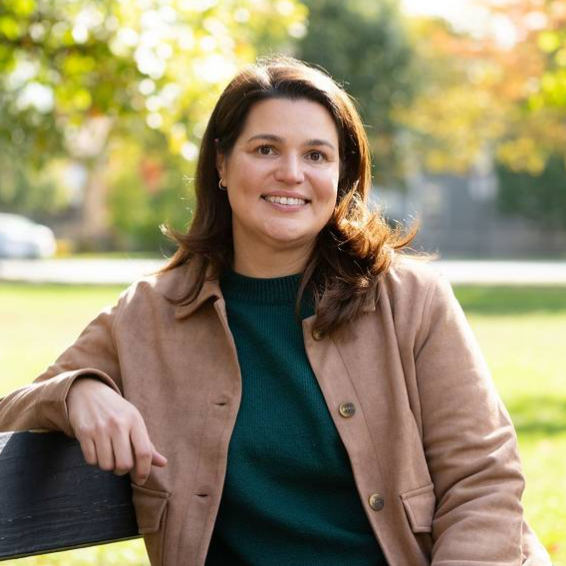
As Bureau Chief for Cook County Bureau of Asset Management, Elizabeth Granato already has experience securing funding sources and identifying revenue streams for county level projects. Now she’s ready to further that. “As Commissioner, I will hold the Department of Transportation and Highways accountable for meeting the goals in the County’s long-range transportation plan and for demonstrating how each project is improving mobility and safety.”
Elizabeth stands out with her experience and deep wealth of knowledge of county systems.
Read Elizabeth’s responses to our questionnaire
What types of transportation do you use during an average week, and how has this shaped your view of transportation policy?
In a typical week I walk, drive, and take public transit. As a lifelong Chicagoan, transit has shaped every stage of my life. I grew up with a single mother and our family relied on transit to get to school, to work, and to move across the city when owning a car was not an option for us. Those experiences shaped my belief that public transportation is not a luxury. It is a lifeline for working people, and it must be safe, reliable, and accessible for everyone.
Today, as a mother of two young children, I see how often our streets and transit system fall short. Long waits for buses, unsafe intersections, and gaps in our bike network make it hard for families to move around their own neighborhoods without relying on a car. Many people would walk, bike, or take transit more often if the options felt safer and more dependable.
As Commissioner, I will support protected bike lanes that keep people safe, bus priority corridors that help buses move on time, and street designs that make it safer to walk near schools, parks, and commercial areas. I will also push for better cross-neighborhood transit connections so people can rely on transit for more than just a trip downtown.
Transportation is not simply a way to reach downtown. It is a public service that should help people move safely within and between neighborhoods.
What are some transportation challenges in your district?
The Northwest Side faces a combination of slow and unreliable bus service, unsafe intersections, missing sidewalks, and limited cross-neighborhood transit options. Many residents feel forced into cars because walking, biking, or taking transit does not feel safe or dependable. We also lack a connected network of protected bike lanes, and too many of our commercial corridors are crowded by fast traffic that makes them difficult to navigate for families and seniors.
In other parts of the district, where neighborhoods are denser and more transit-dependent, residents rely heavily on public transportation to get to school, work, and move across the city. These communities need a well-funded and comprehensive transit system that is accessible to everyone, especially people with disabilities. Aging infrastructure and inaccessible stations create barriers that should not exist. The lack of coordinated planning between our region’s transit agencies has also produced a disconnected patchwork of service that does not support the way people actually travel. Our system is still built around the old model of commuting from neighborhoods to downtown, which no longer meets the needs of riders.
These challenges come from years of underinvestment in neighborhood transit and street safety. As Commissioner, I will focus on improving reliability, safety, access, and regional coordination so people can start having real options in how they move through our county.
Cook County residents often find their local roadways fall under multiple different jurisdictions and standards. How do you view the County’s role in ensuring consistent, safe, and accessible transportation for constituents?
Cook County is uniquely positioned as an excellent convener for the region’s transportation authorities and can be the catalyst for solving highly complex transportation issues. Even when a roadway falls under other jurisdictions, the County can play an important role in addressing safety and accessibility challenges for constituents.
Oftentimes intergovernmental coordination can become the biggest challenge to executing difficult or long term projects. However, as a regional entity Cook County has and can continue to be a voice for regional coordination. As a regional transportation authority Cook County can also play a vital role in beginning the early stages of complex projects that will span multiple transportation jurisdictions. Cook County can act as a catalyst in moving many projects forward by funding early stage design and engineering, as well leading in the coordination of funding from federal, state and local governments.
In my role as Bureau Chief I led complex infrastructure projects that required funding and coordination from federal, state, local and county governments. If not for the efforts of my team in Cook County many of these projects would not have been possible and would have languished due to the lack of funding and intergovernmental coordination.
As Cook County Commissioner I would push our Department of Transportation and Highways to continue and expand their role as a regional coordinator and expert in advancing challenging infrastructure projects. I will also work in true partnership with groups like Better Streets Chicago, transit riders, cyclists, disability advocates, and local governments to identify safety priorities and co-govern solutions.
My experience moving complex ideas into shovel-ready projects has shown me that when residents and advocates help shape plans from the start, projects move faster and truly reflect the needs of the people who rely on our streets every day. We have a real opportunity here to build a transportation system that is safer, more reliable, and more connected, and I intend to make sure the County is a driving force in that work.
What can Cook County do to stabilize and expand access to bikeshare programs that span municipalities?
Cook County can work with local municipalities to understand the barriers to supporting existing bikeshare programs and expanding bikeshare programs in municipalities that do not have them. The County can conduct a countywide assessment of current bikeshare programs to understand where access is limited or unreliable. This assessment should also include a robust community engagement effort to foster a dialogue with residents and communities so their voices can be heard in understanding the challenges and opportunities for bikeshare programs regionally. Cook County can then work in partnership with local municipalities to develop a regional plan for expanding and strengthening bikeshare access throughout the region.
As Bureau Chief, I led a similar initiative to expand EV Charging access throughout Cook County. This 5.5 Million dollar initiative assessed EV charging locations throughout the County, identified EV charging deserts and then worked with local residents and municipalities to install 75 dual port EV charging stations. This model can be replicated for bikeshare infrastructure and programs throughout Cook County.
As Commissioner, I will push to strengthen bikeshare access and improve safety for cyclists. I will work with advocacy leaders like yourself and municipalities to build out protected bike lane networks, create safer connections between bikeshare stations and transit, and ensure maintenance and reliability so biking becomes a real option for people across Cook County.
What role can the County play in bringing funding sources and revenue streams to county transportation projects?
Cook County Commissioners play a critical role in ensuring transportation funding is transparent and aligned with the needs of the people who rely on it. The County receives state motor fuel tax revenue, which gives us the ability to build, maintain, and modernize transportation infrastructure. Commissioners must ensure those dollars support projects that improve safety and access for people walking, biking, taking transit, and driving.
In my work at the County, I oversaw major capital programs and know how important it is to have clear oversight. As Commissioner, I will hold the Department of Transportation and Highways accountable for meeting the goals in the County’s long-range transportation plan and for demonstrating how each project is improving mobility and safety.
Commissioners also have a responsibility to help bring in new funding. We need strong advocacy in Springfield and Washington to secure dollars for the regional projects that shape how people move every day. The CREATE program is a clear example of what is possible when federal, state, County, and City partners work toward a shared goal. CREATE has eased rail bottlenecks, improved freight and passenger movement, and strengthened our regional economy. It shows that coordinated investment delivers real, long-term benefits for communities.
My focus as Commissioner will be to make sure every available revenue source supports a transportation system that is safe, reliable, and more connected for the residents of Cook County.
Cook County has a history of innovating access to public services, including public transit – such as the Fair Transit South Cook pilot. As commissioner, what are ways you envision the County innovating on transportation?
Cook County has shown that transit innovation is possible through efforts like the Fair Transit South Cook pilot. That program demonstrated that lowering fares and improving reliability can reconnect entire communities to jobs, schools, and healthcare access. With the new statewide transit legislation, we now have an even stronger framework to transform how people move across our region, but the County has a real responsibility to make sure these changes actually reach the riders who depend on them. Our victories mean nothing without leaders to carry them forward to the communities who depend on them.
As Commissioner, I will carry this work forward by supporting the transition from Fair Transit South Cook to the Access Pilot Program, which expands affordable transit options countywide. I will push to extend a 50% fare reduction to low-income riders on PACE and CTA and work to secure a long-term funding source so this does not remain a temporary pilot that disappears when political winds shift.
My goal as Commissioner will be to make affordable, reliable transit permanent in Cook County and to ensure these investments reach the families who rely on transit every day.