We endorse Toni Preckwinkle for Cook County Board President.
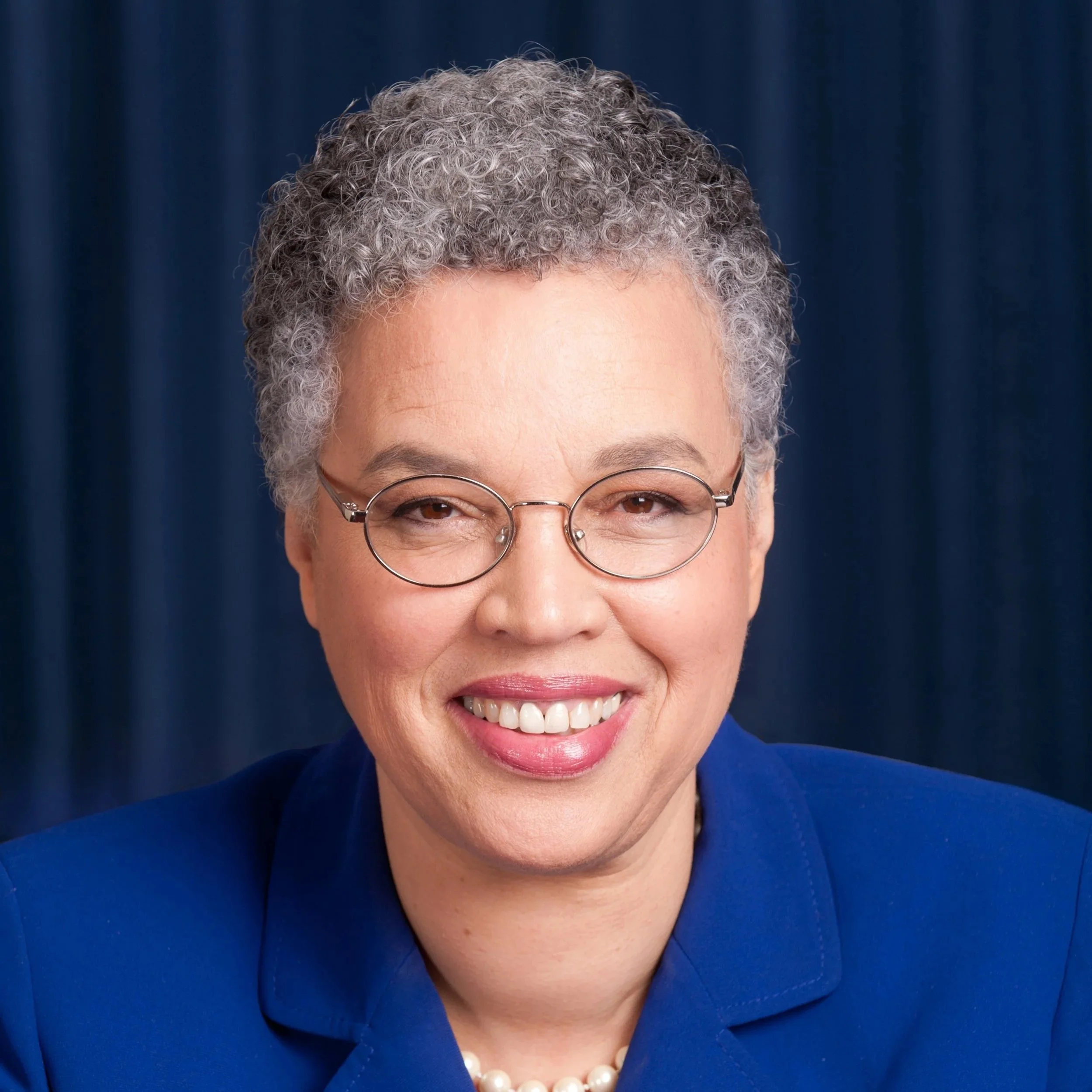
Toni Preckwinkle has spent her career advocating for a more equitable, accessible, progressive Cook County. Her legacy includes creating the first countywide long-term multi-modal transportation plan, developing innovative pilots like Fair Transit South Cook, and ferocious advocacy for the NITA transit package passed in the IL General Assembly this Fall.
As President Preckwinkle says, “I have been able to further define transportation needs, tested how they can be delivered, put our own money behind it, created a proven track record and developed sound transportation policy to curate even greater future outcomes.” We support the re-election of Toni Preckwinkle for Cook County Board President.
Read Toni’s responses to our questionnaire
What types of transportation do you use during an average week, and how has this shaped your view of transportation policy?
When I was Alderman of the 4th Ward, I used the CTA almost daily. And in my time as a History teacher, I saw how my students depended on the public transit system to get to school. As I became County Board President, the disconnect between public transit providers became even more evident. I saw the need for connected and accessible transportation options across the county, but specifically in historically disinvested communities which suffer from lack of infrastructure investment and transit deserts. This has hindered economic growth, degraded quality of life for our residents and creates workforce challenges for our business and it hurts us all. We all do better when we all do better.
With all of this in mind, I charged my Department of Transportation and Highways to develop a long range plan - a policy framework that would guide the County’s transportation investments. This work identifies five policy priorities:
Supporting our role as the nation's freight capital.
Prioritizing transit and other transportation alternatives.
Promoting equitable investment.
Maintaining and modernizing what already exist;
and increasing transportation investment.
Since the completion of that plan nearly a decade ago, we have launched a very successful annual grant program, Invest in Cook, completed our Freight Plan, Transit Plan and Bike Plan, became a member of the CREATE program, a national model for public-private partnership, and completed a sub area transit pilot that has now expanded to a regional level. Through this work, I have been able to further define transportation needs, tested how they can be delivered, put our own money behind it, created a proven track record and developed sound transportation policy to curate even greater future outcomes.
What are some transportation challenges in your district?
Transportation challenges vary across the County. Some areas have robust transit service, some areas are a transit desert. Some areas have sidewalks and connected bike networks and others have nothing but a worn, muddy shoe path. Some areas have roadways in a good state of repair, and other had not seen investments in decades. While the needs vary, the need for transportation infrastructure investment is heard across all, and it needs to be achieved equitably.
The policy priorities of our long range plan, Connecting Cook County, and the modal plans we have completed (Freight, Bike and Transit) have provided a solid framework for making strategic investments. Those that connect communities, provide transportation options, maintain our region’s economic competitiveness and create pathways for funding opportunities.
Cook County residents often find their local roadways fall under multiple different jurisdictions and standards. How do you view the County’s role in ensuring consistent, safe, and accessible transportation for constituents?
The County has played a number of significant roles in advancing projects under shared jurisdictions, ranging from convener, advocate, financial partner or project lead. As project lead, Cook County has the ability to leverage a blend of financial resources and technical expertise to advance local projects than span jurisdictional limits. Many pedestrian and bike projects experience challenges in delivery because there needs to be continuity across multiple communities to establish the needed path connections for an accessible network. This was a key component of both our Transit Plan and Bike Plan.
We have served as a convener and advocate to bringing multiple agencies along a corridor, or subarea together to improve a segment in its entirety, instead of in pieces. This not only eases the burden of construction on residents, but maximizes the benefit for residents through coordinated investments. Our strong partnerships with IDOT and the Illinois Tollway have produced a number of projects that would not be delivered if we had not.
We have worked with towns, cities and villages on jurisdictional transfers to create continuity in the jurisdictional assets, bringing some fully under local control. This has been a benefit for communities, especially in or near their town center where there is a certain aesthetic character desired and having ownership of the roadway creates greater flexibility when negotiating development opportunities.
Lastly, I created an annual grant program, Invest in Cook, designed to assist local agencies (municipalities and townships) and provide funding to advance their local priorities. By implementing these projects, safe and accessible transportation is brought to communities.
What can Cook County do to stabilize and expand access to bikeshare programs that span municipalities?
Bike sharing has witnessed significant growth and popularity in Chicago over the past few years with the introduction of Divvy bikes and kiosks now located throughout the entire city, as well as Evanston. The expansion of bike share was identified in both the County Bike and Transit Plan. Given its success and recommendations from these plans, Cook County DOTH has identified target areas where bike share could prove successful elsewhere in suburban Cook. This advance work is the foundation for a potential pilot program for introducing bike share stations and equipment, and testing its success.
DOTH is partnering with Forest Preserve staff through this study to prioritize potential bike share pilot zones in areas featuring forest preserves, which are current cycling havens. Pilot zones are being anchored by major transit access points – CTA and Metra rail stations and high-frequency Pace bus stops, in order to facilitate easy access to bike share. Pilot zones feature existing or planned bicycling infrastructure, as defined by the proposed Low Stress Bike Network featured in the Bike Plan. This is being done to ensure cyclists may safely connect between transit, forest preserves, and activity centers in each zone.
What role can the County play in bringing funding sources and revenue streams to county transportation projects?
Creating and sustaining partnerships across local agencies has proven to be very successful in being able to leverage the funding that comes to the County.
At the state and federal level, it is important to have a portfolio of multimodal projects that align with strategic initiatives across multiple phases (planning, design and construction). The implementation of the County’s robust capital program and its Invest in Cook program has clearly demonstrated its capacity for broad project delivery.
Through the established relationships of the Administration and the Commissioners, there is great opportunity to elevate the County’s proven role as a regional transportation leader and highlight its success in project implementation. This strength not only creates a low risk, high yield environment ripe for the infusion of additional funding sources, but substantiates the funding levels required to support the programs that provide sustainable revenues to support this work.
Cook County has a history of innovating access to public services, including public transit – such as the Fair Transit South Cook pilot. As President, what are ways you envision the County innovating on transportation?
Our past work in freight rail (CREATE) and public transit (champion for transit legislation, including the Fair Transit Pilot) has established strong partnerships and created policy and project implementation models that can be applied nationally.
In Cook County, we are working towards intelligent transportation systems – putting traffic signal technology to work to allow for more efficient travel and adapting to changes in travel demand on our roadway system.
Our advocacy on the recent transit legislation is bringing Mobility as a Service to northeast Illinois public transit, something I have long supported and worked to advance.
We continue to participate in first mile, last mile pilots to eliminate transportation barriers and identify opportunities to provide accessible and connected communities and support our workforce.
Partnering with communities and the Forest Preserve to expand bikeshare.